Verified BM for Print Shops: A Buying Guide for Custom Printing Businesses
Searching for a verified BM for print shops often starts with a practical need: organizing promotional assets, helping staff manage inquiries, or preparing a more reliable handover from customer service to production.
Before choosing a provider, identify the problem you want to solve. A portfolio-related offer does not explain whether artwork uploads, quotation forms, order tracking, or staff training are included.
For custom printing businesses, a useful proposal should clearly separate business setup from the systems used to receive files, approve proofs, and release jobs for production.
Start with the Products You Sell
Describe your printing services and how customers place orders.
A shop producing personalized photo gifts has different requirements from a commercial printer handling repeat business orders. Some products may have fixed options, while others require a quotation and artwork review.
Your initial brief should answer:
-
Which business operates the shop?
-
What products does it sell?
-
Where do customers submit inquiries?
-
How are artwork files received?
-
Who prepares quotations and proofs?
-
What currently causes delays or confusion?
For example:
We produce personalized photo prints and wall décor. Customers send product requirements and images, our team prepares a proof, and production begins after the agreed approval steps. We need help assessing business setup, staff access, and inquiry handling.
This gives the provider a concrete workflow to evaluate.
1. Clarify the Business and Assets Involved
Identify the organization represented by the proposed setup and the people authorized to manage it.
Document who controls the website, business Page, advertising assets, and any external ordering system.
Ask the supplier to explain:
-
Which business the portfolio represents.
-
What authority it has to provide the proposed arrangement.
-
What your company will control directly.
-
Which assets depend on another provider.
-
Who retains access after delivery.
-
What happens when the relationship ends.
If another organization’s portfolio is proposed, ask how the arrangement is authorized and maintained.
If you want verification assistance for your own printing company, state that explicitly. A management invitation should not be treated as evidence that your business owns every associated asset.
2. Separate Portfolio Services from Order-Workflow Work
Request an itemized scope rather than accepting “complete print shop setup” as a deliverable.
| Service area |
What to clarify |
| Verification assistance |
Information review, preparation, and submission support |
| Asset configuration |
Specific assets and settings covered |
| Employee access |
Tasks each staff member needs to perform |
| Inquiry forms |
Product details, destinations, and changes included |
| Artwork handling |
Upload, storage, and file-linking work |
| Order-system connection |
Systems involved and implementation responsibilities |
| Testing |
Scenarios and expected results |
| Handover |
Documentation, training, and outstanding tasks |
A provider offering business setup assistance may not develop an artwork portal or configure production software.
Ask which tasks belong to the supplier, your website developer, and your internal team before comparing prices.
3. Define the Information Needed for a Useful Inquiry
If inquiry handling is included, specify the details your staff need to prepare an accurate response.
Depending on the product, these may include:
-
Product type.
-
Finished dimensions and orientation.
-
Quantity.
-
Material or finish.
-
Personalization requirements.
-
Requested completion date.
-
Delivery or collection preference.
-
Whether artwork is ready or needs assistance.
Distinguish a customer’s requested specification from a production-approved specification.
For example, selecting a print size should not automatically imply that the supplied image has been checked and accepted for that size.
Ask the provider to explain where staff review takes place and how missing information is identified.
4. Keep Artwork Versions and Proof Approval Clear
If the proposal includes artwork-related workflow changes, define how files are associated with an order.
Ask how the setup will distinguish:
-
The original customer file.
-
A revised file submitted later.
-
The proof sent for review.
-
The version approved for production.
Hypothetical example: A customer uploads a family photograph, then sends a corrected version through another channel. Staff need a clear way to identify the approved file before production begins.
A successful upload alone does not establish that the correct version will reach the production team.
Agree on who records approval, where that record is kept, and what happens when the customer requests another revision. These are workflow requirements to assess, not features automatically included with a verified BM offer.
5. Plan Access for Sales, Design, and Production
Describe staff responsibilities before requesting access configuration.
Customer-service employees may handle inquiries and quotations. Designers may prepare proofs. Production staff may need the approved specifications and files.
Ask the provider to assess suitable access arrangements for the agreed tasks.
Also identify:
-
Who approves new employee access.
-
How freelance designers are involved.
-
Who can download customer files.
-
What information external production partners receive.
-
How access is reviewed after an assignment ends.
Use sample artwork for demonstrations where practical. Avoid distributing real customer photographs or confidential commercial designs during preliminary sales discussions.
Keep credentials and other secrets out of general project notes.
6. Test a Complete Sample Order
If order-workflow assistance is included, test the journey with a clearly marked sample order.
Useful scenarios include:
| Scenario |
Expected check |
| Customer selects product options |
Staff receive the intended specifications |
| Artwork is submitted |
The file is associated with the correct request |
| A revised file arrives |
Staff can identify the current version |
| A proof is approved |
Approval refers to a specific proof |
| Required information is missing |
The request is flagged for follow-up |
| Production receives the job |
Approved specifications and files remain consistent |
Include the employees who perform each step.
Record the expected outcome, observed result, and any unresolved issue. Do not release a sample order into real production or charge a customer merely to demonstrate a connection unless those actions have been explicitly agreed.
Technical delivery should be assessed separately from print quality, turnaround performance, or sales results.
7. Compare Setup Costs and Ongoing Changes
Ask the provider to distinguish the initial project from later updates.
A shop may add products, change size options, introduce new finishes, or work with another production partner. Clarify how those changes would be handled.
Request separate pricing for:
-
Assessment and verification assistance.
-
Configuration or development.
-
Testing and employee training.
-
Additional product workflows.
-
Third-party subscriptions, if required.
-
Later changes and troubleshooting.
-
Final documentation and handover.
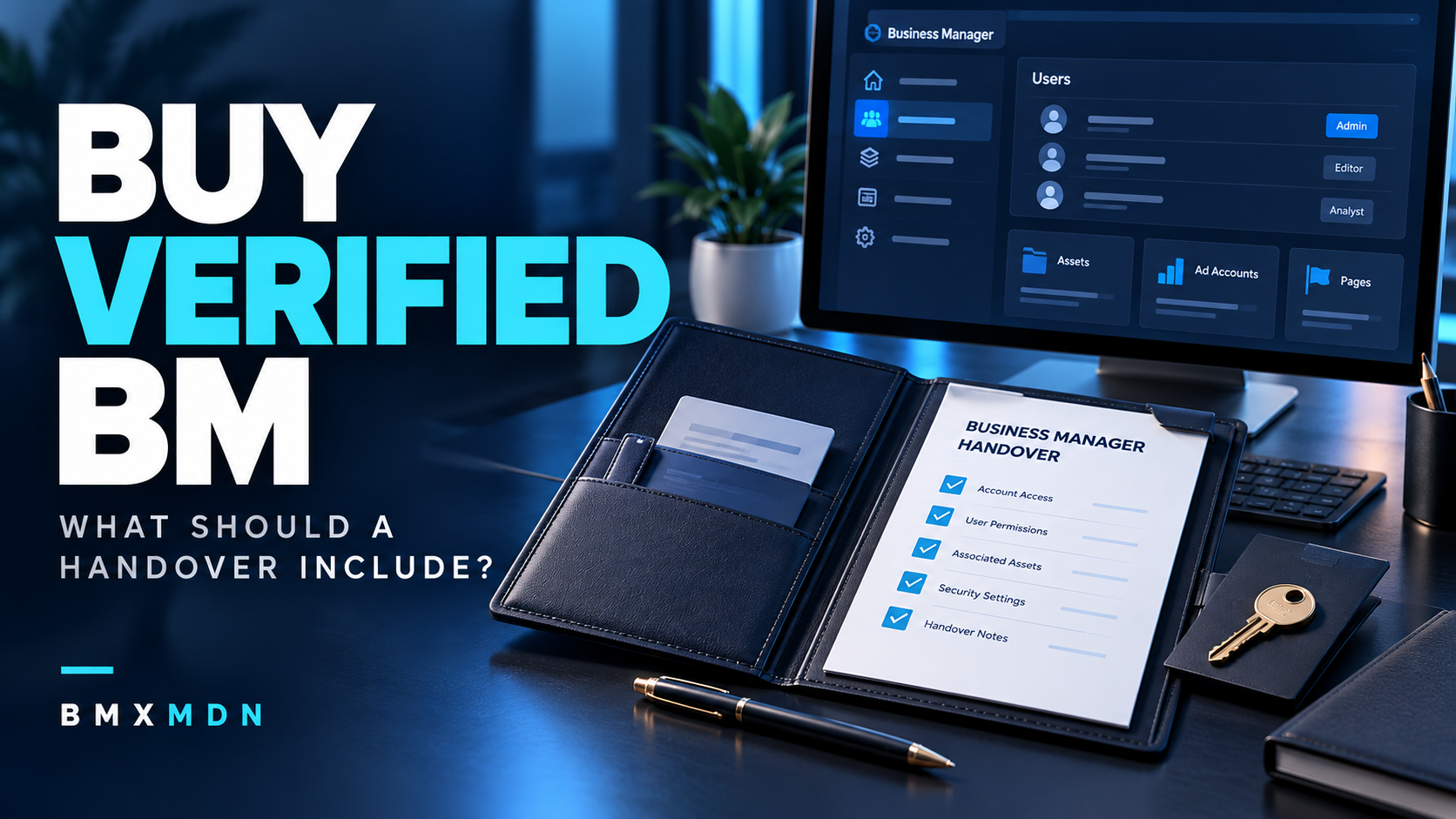
Before accepting delivery, request an asset inventory, configuration summary, test results, known limitations, and a list of outstanding tasks.
The handover should help your team maintain routine work without reconstructing the project from old messages.
Inquiry Template for Print Shops
Hello, we operate [shop name] at [website URL] and produce [printing products]. Customers currently submit requirements through [channels], and artwork is handled through [process or system]. We need assistance with [specific business setup tasks]. Our main blocker is [issue]. Please provide an itemized proposal covering business identity, authorized access, configuration, artwork-workflow boundaries, testing, documentation, costs, and ongoing support.
Frequently Asked Questions
Does a verified BM package include an online ordering system?
Only if that service is explicitly included. Confirm the platform, development work, configuration, and recurring costs.
Does business setup assistance include artwork checking?
Do not assume so. File review, proof preparation, and production approval should have named owners and a defined scope.
Can the proposal cover both fixed-price and custom-quote products?
Describe both processes and ask the provider to identify shared work and product-specific requirements.
Should a supplier receive customer photographs during the sales discussion?
Use sample files where practical. If live files are needed for a later task, agree on the purpose, access, and handling arrangements first.
Does verification guarantee more printing orders?
No. Verification status alone does not demonstrate customer demand, effective advertising, or order profitability.
Request a Proposal for Your Printing Business
Prepare your business details, product list, existing assets, inquiry process, and the specific issue you want to resolve.
If you need assistance reviewing your situation, visit BMXMDN to discuss your business verification and print-shop setup requirements.
Request a proposal through BMXMDN with a clear scope covering business control, customer inquiries, artwork responsibilities, practical testing, and technical handover.