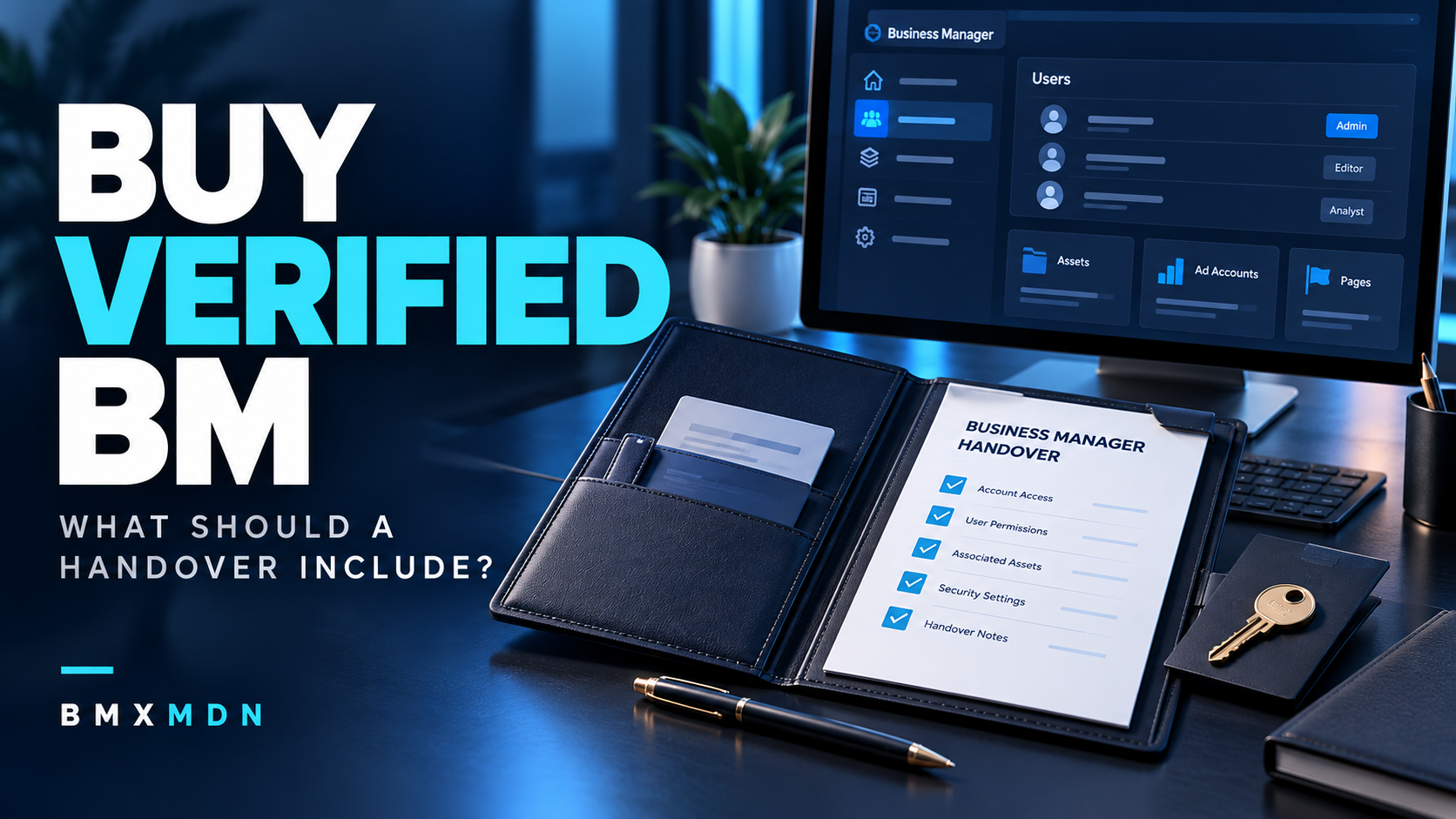
Verified BM for B2B Companies: A Buying Guide for Business Teams
Searching for a verified BM for B2B companies often starts with a business development requirement: promoting professional services, supporting product inquiries, or organizing assets used by marketing and sales.
Before choosing a provider, identify the operational problem you want to solve. A portfolio-related offer does not explain whether inquiry routing, website configuration, reporting, or employee onboarding is included.
For a B2B company, the proposal should connect the requested setup to a clear process: who manages the assets, who receives inquiries, and who maintains the arrangement after delivery.
Start with Your Business Model
Describe what your company sells and how a prospective customer becomes a sales opportunity.
A manufacturer requesting distributor inquiries has different requirements from a consultancy booking introductory calls or a supplier collecting quotation requests.
Your brief should explain:
-
Which business operates the service or product line.
-
Who the intended business customers are.
-
What action a prospect should take.
-
Where inquiries currently arrive.
-
Which team follows up.
-
What is incomplete or causing delays.
For example:
We supply commercial equipment. Prospects request quotations through our website, and our regional sales team follows up. We need an assessment of business setup, staff access, and the responsibilities involved in maintaining the inquiry process.
This gives a provider more useful information than a general request for a verified BM.
1. Confirm the Business Represented by the Setup
Identify the organization that should be represented and the people authorized to act for it.
If your company uses a trading name, several product brands, or external distributors, explain those relationships before requesting a proposal.
Ask the provider to document:
-
The business represented by the proposed portfolio.
-
The organization controlling the relevant assets.
-
The supplier’s authority to perform the work.
-
The access your company will receive.
-
Any continuing dependency on another organization.
If the offer involves another business’s portfolio, request an explanation of how the arrangement is authorized and maintained.
Do not treat access to a management interface as evidence that your company owns the organization represented by it.
If you want verification assistance for your own business, state that explicitly.
2. Separate Portfolio Services from Sales-System Work
Ask for an itemized proposal.
Business verification assistance, asset configuration, website work, and sales-system integration should have their own deliverables.
| Service area |
What to clarify |
| Verification assistance |
Information review, preparation, and submission support |
| Asset configuration |
The assets and settings included |
| Employee access |
Tasks each employee needs to perform |
| Inquiry collection |
The form, page, or channel being assessed |
| Sales handover |
Where inquiries go and who receives them |
| Integration work |
Systems involved and implementation responsibilities |
| Testing |
Scenarios and expected results |
| Support |
Maintenance coverage and additional charges |
A provider offering portfolio assistance may not be responsible for your website or CRM.
Identify those boundaries before comparing prices. Otherwise, two proposals can appear comparable while covering substantially different work.
3. Define the Handover from Marketing to Sales
For B2B projects, agree on what happens after someone expresses interest.
Describe the intended process in plain language:
A prospect submits an inquiry, the appropriate team receives it, and a named employee takes responsibility for follow-up.
Then clarify the details that matter to your company:
-
Which information is necessary for follow-up?
-
How are product or regional inquiries assigned?
-
Who handles inquiries without a clear destination?
-
What happens outside normal working hours?
-
How does the team identify duplicate submissions?
-
Who investigates missing or delayed records?
These are requirements to assess, not features automatically included with a verified BM offer.
If the supplier proposes automation, ask it to identify the systems involved, the work required, and the person responsible for ongoing maintenance.
4. Agree on Reporting Definitions Before Implementation
Marketing and sales should use consistent terms when evaluating the setup.
An inquiry, a qualified opportunity, a quotation, and a completed sale are different milestones. Your company should define each one before requesting reports or integration work.
For example:
| Milestone |
Example definition to agree internally |
| Inquiry received |
A new request reaches the designated destination |
| Inquiry assigned |
A team member accepts responsibility |
| Qualified opportunity |
The request meets agreed business criteria |
| Quotation issued |
Sales sends a documented commercial proposal |
| Sale completed |
The company records the agreed purchase outcome |
These are example business definitions, not platform reporting categories.
Ask the provider which milestones its work can help record and which remain within your internal sales process.
Avoid accepting a vague promise to “track everything” without identifying the records, systems, and responsibilities involved.
5. Test Business Scenarios with Sample Data
A useful test plan should reflect how your company actually handles inquiries.
If inquiry handling is included, consider testing:
-
A complete quotation request.
-
A request missing an optional detail.
-
An inquiry for a different region.
-
A duplicate submission.
-
An unavailable receiving system.
-
A staff member changing responsibilities.
Use sample records where practical. Do not share a production customer database merely to demonstrate the workflow during a sales discussion.
Record the expected result for each test, the observed result, and any unresolved issue.
Hypothetical example: A supplier demonstrates that a form submits successfully, but the record goes to an inbox nobody monitors. The technical submission may work, while the agreed business handover remains incomplete.
Acceptance criteria should cover the intended destination and responsible team, not just the first visible success message.
6. Plan for Distributors and External Partners
If distributors, consultants, or agencies participate in the process, define their responsibilities separately.
Your brief should explain:
-
Which business owns each relevant asset.
-
What partners need to access.
-
Whether they handle all inquiries or selected ones.
-
Who approves changes.
-
How their access will be reviewed.
-
What happens when the relationship ends.
Keep the proposed access appropriate to the agreed tasks.
Also identify who communicates changes to the supplier. Conflicting instructions from marketing, sales, and an outside agency can delay work even when the technical scope is straightforward.
Appoint one internal project owner to coordinate decisions.
7. Compare Delivery, Maintenance, and Exit Costs
Ask the provider to separate initial setup from ongoing operation.
The quotation should identify:
-
Assessment and preparation fees.
-
Configuration or development work.
-
Testing and documentation.
-
Employee training.
-
Recurring connector or service charges, if applicable.
-
Support for later changes.
-
Handover assistance when the engagement ends.
Clarify whether adding another product line, sales region, or receiving system would require a new quotation.
Before accepting delivery, request an asset inventory, configuration summary, test results, known limitations, and a list of outstanding tasks.
The documentation should help your team continue operating the agreed process without relying on undocumented supplier knowledge.
Inquiry Template for B2B Companies
Hello, we operate [business name] at [website URL] and provide [products or services] to [customer type]. We need assistance with [specific business setup tasks]. Prospective customers currently contact us through [channel], and inquiries are handled by [team]. Our main blocker is [issue]. Please provide an itemized proposal covering business identity, authorized access, configuration, inquiry handover, testing, documentation, recurring costs, and support.
Frequently Asked Questions
Does a verified BM guarantee qualified business inquiries?
No. Verification status alone does not demonstrate customer demand, campaign effectiveness, inquiry quality, or sales performance.
Is CRM integration included?
Only if it appears in the agreed scope. Confirm the system, data fields, assignment rules, testing, and maintenance responsibilities.
Can one proposal cover several product divisions?
Describe each division, the business operating it, and any shared systems. Ask the provider to identify common work and division-specific requirements.
What if our sales team already uses an established process?
Document that process before requesting changes. The supplier should explain how its proposed work fits the existing arrangement and what would need to change.
Should we replace our current setup before seeking assistance?
Request an assessment first. The proposal should explain what can be retained, what needs attention, and why any additional arrangement is necessary.
Request a Proposal for Your B2B Setup
Prepare your company details, website URL, existing asset information, inquiry process, and the specific problem you need to resolve.
If you need assistance reviewing your situation, visit BMXMDN to discuss your business verification and B2B setup requirements.
Request a proposal through BMXMDN with a clear scope covering business control, marketing-to-sales handover, practical testing, documentation, and ongoing support.