Buy Verified BM: How to Compare Packages Before You Pay
Searching for buy verified BM can produce offers with similar names but very different deliverables. One provider may offer verification assistance for your company, while another describes access to an existing setup or a managed service.
Before comparing prices, establish what each package actually includes.
A useful purchasing decision starts with your intended business use, the identity represented by the setup, and the control your team will receive. This guide provides a practical framework for comparing offers and agreeing on payment terms.
Start with a Minimum Requirements Brief
Write down the result your business needs before contacting suppliers.
For example:
We need assistance with our company’s business setup so our authorized team can manage the agreed assets. We want documented ownership, clear access responsibilities, and a handover we can maintain.
If your requirement concerns an application, customer onboarding, advertising operations, or messaging integration, describe that workflow separately.
Your brief should include:
-
Your operating business and website.
-
The assets you already use.
-
The work currently blocked.
-
The capabilities required after delivery.
-
The people who will manage the setup.
-
Any dependencies on agencies or software providers.
Send the same brief to each supplier. Otherwise, you may receive quotations for different problems.
1. Ask What “Buy Verified BM” Means in Each Offer
Do not assume that every listing describes the same arrangement.
Ask whether the proposal covers:
-
Verification assistance for your own business.
-
Configuration of assets you already control.
-
A service managed through the supplier’s infrastructure.
-
A proposed transfer involving existing assets.
-
Additional application or integration work.
For any proposed transfer, request an explanation of the seller’s authority and the applicable platform requirements. A commercial agreement alone does not establish that every asset or access arrangement can be transferred as proposed.
If the supplier cannot explain the arrangement clearly, the package is not ready for a meaningful price comparison.
2. Build a Comparison Table Around Evidence
Use one comparison sheet for all shortlisted offers.
Record the answer to each question and the evidence supplied. Mark unanswered items as unresolved rather than assuming they are included.
| Comparison area |
What to request |
| Business identity |
The organization represented by the proposed setup |
| Ownership |
The owner of each included asset |
| Authorization |
The basis on which the supplier can perform the work |
| Verification claim |
Current evidence linked to the specific portfolio |
| Access |
The actions your team will be able to perform |
| Included assets |
An itemized list with exclusions |
| Dependencies |
Services, businesses, or people the setup relies on |
| Delivery |
Tasks, milestones, and acceptance criteria |
| Pricing |
Initial fees, recurring charges, and potential extras |
| Support |
Covered issues, duration, and escalation process |
This table helps expose differences that a short sales description may hide.
3. Separate Essential Requirements from Optional Extras
A package may contain features that sound attractive but do not address your current needs.
Classify each proposed component as essential, useful later, or unnecessary for the present project.
For example, a business seeking help with its own verification may not need custom reporting development. A software platform may need a tested customer connection flow that a basic setup package does not include.
Ask suppliers to price optional work separately.
This approach helps your team compare equivalent scopes and understand the cost of expanding later.
4. Examine Access and Continuing Control
If an offer uses phrases such as “full access,” “full admin,” or “original access,” ask for a precise explanation.
Identify what your team can do and which actions remain dependent on another party.
Questions should include:
-
Can our authorized administrators manage the agreed users?
-
Which assets are owned by our business?
-
Which assets are only shared with us?
-
Who retains access after delivery?
-
Who controls information needed for future business checks?
-
What happens if the supplier stops providing support?
Do not treat an invitation or a screenshot as a complete ownership explanation.
If personal profiles are mentioned in the package, ask how the proposed arrangement works under the applicable rules. Avoid relying on another person’s identity or recovery credentials as your business’s access plan.
5. Check the Exact Setup Being Offered
Ask for evidence connected to the specific proposal, not a generic example of the supplier’s previous work.
A walkthrough should make it possible to understand the portfolio being discussed, the claimed status, the included assets, and the supplier’s role.
Ask the provider to disclose known restrictions, unresolved issues, and dependencies relevant to your use case.
Keep evidence collection proportionate. You need enough information to assess the offer without requesting unrelated personal records or confidential customer data.
If important claims remain unverified, record that limitation before agreeing to payment.
6. Calculate the Cost Beyond Initial Delivery
The headline price may cover only one part of the arrangement.
Ask suppliers to identify:
-
Assessment or preparation fees.
-
Configuration charges.
-
Development work.
-
Recurring management fees.
-
Required third-party subscriptions.
-
Additional support charges.
-
Costs for later changes.
A practical comparison is the total cost of the agreed scope over the same operating period. Include recurring services only where they are actually required by the proposal.
Also consider what happens when those services end. A lower initial price may involve ongoing dependence that matters more than the upfront saving.
7. Tie Payment to Reviewable Milestones
Agree on what your team can inspect at each stage.
For example, a proposal could separate the initial assessment, configuration work, agreed demonstrations, and final handover.
Each milestone should identify:
-
The supplier’s deliverable.
-
Your business’s responsibilities.
-
The evidence used to confirm completion.
-
Any unresolved external dependency.
-
The payment due under the agreement.
Avoid defining completion only as “BM delivered.” That phrase does not establish that the delivered arrangement matches the scope.
If the supplier offers a guarantee, ask exactly what remedy it provides and under which conditions. A refund commitment and a promise about future platform behavior are different claims.
8. Review Replacement, Refund, and Exit Terms
Read the conditions before paying.
For replacement terms, ask whether the alternative must meet the same identity, ownership, access, and functionality requirements. Another setup is not automatically equivalent because the seller describes it with the same label.
For refunds, clarify the eligible amount, exclusions, evidence required, and processing period.
For service exit, document what your team retains and which connections or services stop.
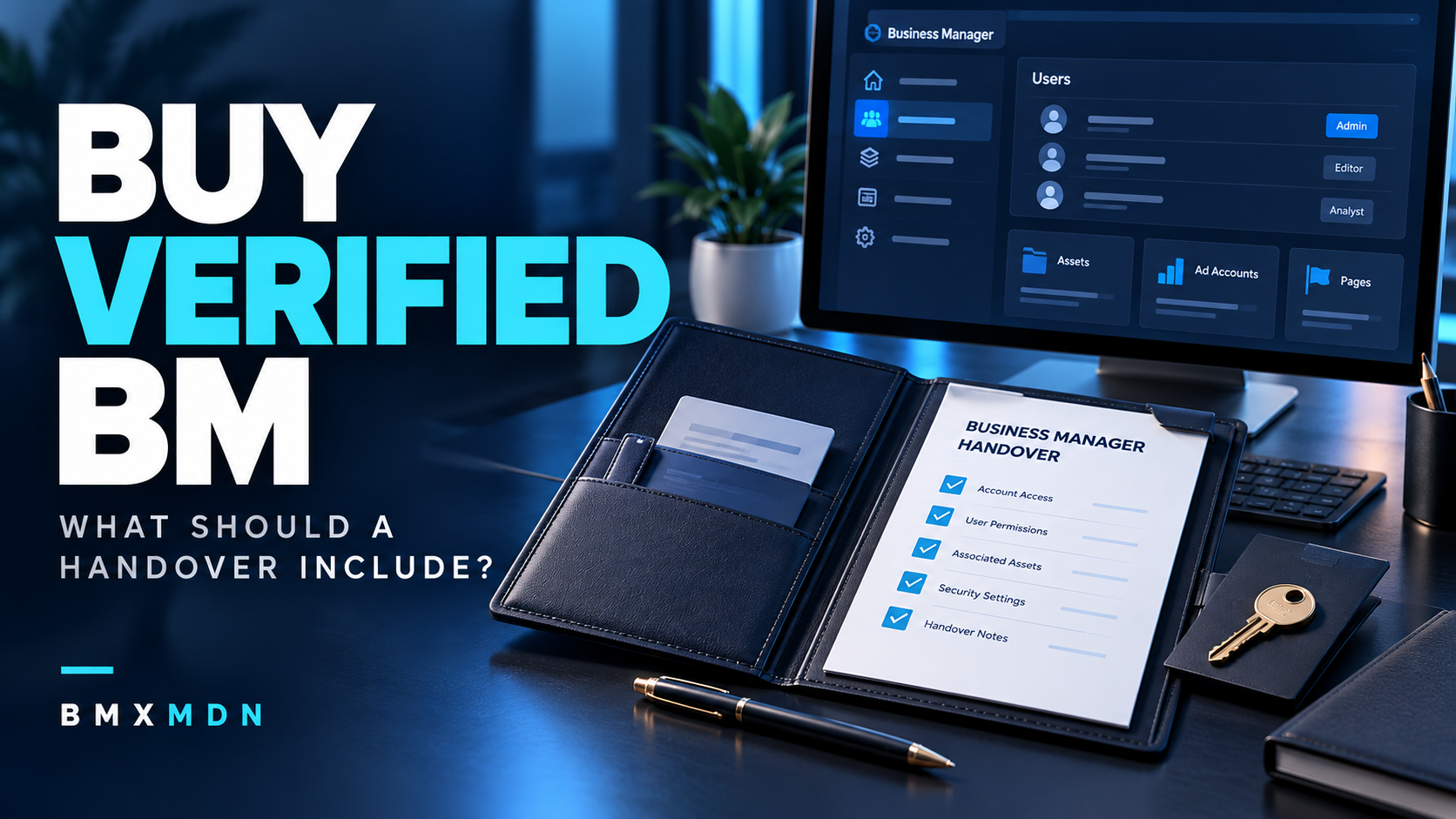
The handover should include asset identifiers, ownership and access records, configuration notes, tests performed, known limitations, and support contacts.
Example: Comparing Two Verified BM Offers
Suppose Provider A proposes a lower initial fee for access to a supplier-managed arrangement. Provider B proposes assistance with your company’s own setup, supported by documented preparation and handover.
These are different service models, even if both are advertised using “verified BM.”
If your requirement is long-term control of your own company’s setup, compare each offer against that requirement first. Do not choose solely by price and investigate ownership afterward.
This is an illustrative comparison, not a claim about any specific provider.
Inquiry Template for Comparing Verified BM Packages
Hello, we operate [business name] at [website URL] and need [specific outcome]. Please explain your service model and provide an itemized proposal covering the represented business, ownership, authorization, verification evidence, included assets, access capabilities, dependencies, delivery milestones, initial and recurring costs, support, refund conditions, and handover. Please identify optional work separately.
Frequently Asked Questions
What should I check first when looking to buy verified BM?
Identify the arrangement being offered and the business it represents. Then assess ownership, access, included work, and suitability for your intended use.
Is the cheapest verified BM package the best value?
Only if it meets the same requirements with acceptable responsibilities and support. Compare equivalent scopes and total costs before deciding.
Does an aged BM label prove reliability?
Age alone does not establish ownership, current condition, suitability, or future availability. Ask for evidence addressing those points directly.
Is full admin access enough to confirm ownership?
No. Request an asset-by-asset explanation of ownership, administrative control, delegated access, and continuing dependencies.
Can verification assistance be quoted separately?
Ask for that option if your goal is to verify your own business. A focused quotation may be easier to evaluate than a package containing unrelated assets or services.
Request a Proposal for Your Requirements
Prepare your business details, website URL, existing assets, required capabilities, and current blocker.
If you need assistance reviewing your situation, visit BMXMDN to discuss your business setup and verification requirements.
Request a proposal through BMXMDN covering the service model, business identity, ownership, access, evidence, costs, acceptance criteria, and handover so you can compare the offer before making payment.